Best Countries to Incorporate a Second Company in 2027

A second company can give a business a separate legal structure for entering new markets, serving international clients or managing a distinct line of operations. The jurisdiction selected can also influence where the company can operate, how it accesses financial services and what it costs to maintain.
The challenge is finding a jurisdiction whose regulatory framework, banking environment, tax rules and substance requirements align with the company's intended activities. A low tax rate or inexpensive registration alone may not make it the right choice.
This guide examines six jurisdictions for incorporating a second company in 2027, comparing their costs, tax frameworks, banking access and operational requirements.
Key Takeaways
- A second company can support market expansion, new business lines or separate international operations without replacing an existing business.
- Próspera, Zanzibar and Itana offer distinct incorporation options through TFTC.
- Compare banking access, substance requirements, setup costs, tax conditions and ongoing administration before choosing a jurisdiction.
- Foreign incorporation does not automatically remove existing tax or reporting obligations.
Best Countries to Incorporate a Second Company in 2027
1. Próspera, Honduras
Best for: SaaS companies, digital agencies, technology businesses and internationally oriented service providers seeking an alternative corporate framework.
Overview
Próspera ZEDE, located on Roatán Island, Honduras, operates under a distinct legal, regulatory and tax framework. Its digital company registration process and business-friendly structure make it an option for companies seeking a separate entity for international operations.
Key Business Advantages
Próspera offers several features that may appeal to businesses establishing a second company:
- Flexible corporate framework: Businesses can establish legal entities under the zone's regulatory system.
- Digital administration: Company formation and relevant administrative processes can be handled remotely.
- Financial services ecosystem: Businesses can explore banking, fintech and international payment providers operating within the jurisdiction.
Formation Costs and Business Management
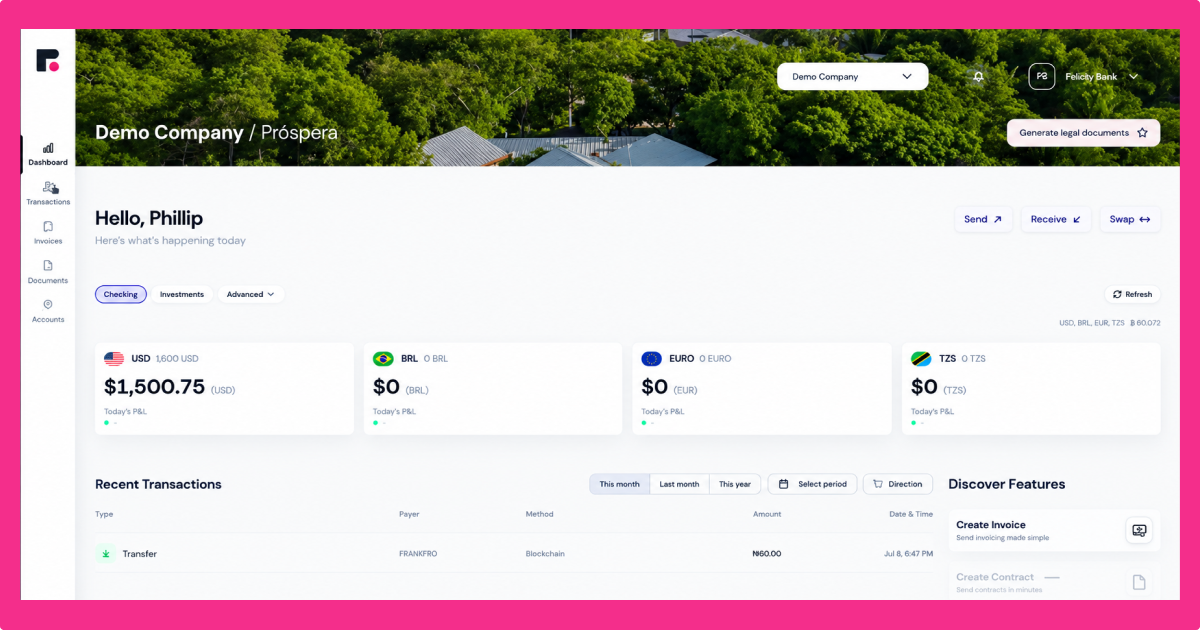
Businesses looking to incorporate in Próspera can get started through our Próspera formation option. Our DAZ platform supports the formation process and provides a business management dashboard for handling essential business activities.
Through DAZ, businesses can access:
- Invoicing and payment functionality.
- Transaction history.
- Account balance visibility.
Our published platform pricing for Próspera includes:
- Setup fee: $150
- Annual subscription: $229
Banking services remain subject to individual providers' onboarding and approval requirements. Incorporation does not automatically guarantee access to a business bank account.
Tax Framework and Considerations
Próspera's published business tax model applies a 10% rate to a presumed 10% gross-revenue base, resulting in an effective rate of 1% of qualifying gross revenue.
Businesses should consider the following:
- The tax treatment depends on the company's qualifying activities and applicable rules.
- Companies operating outside the zone may have additional domestic tax obligations.
- Incorporating in Próspera does not automatically remove tax or reporting responsibilities in the company's existing jurisdiction.
The ZEDE framework has faced constitutional and policy challenges, but Próspera continues to operate and process business incorporations. Businesses considering the jurisdiction should stay informed about relevant developments as they assess their long-term operating plans.
To explore incorporation, visit our Próspera page or access the DAZ platform.
2. Zanzibar, Tanzania
Best for: Digital agencies, technology companies, media businesses and remote-first service providers serving international clients.
Overview
The Zanzibar Digital Free Zone is a designated economic zone established under Zanzibar's Investment Act 2023. Its framework is built around digital businesses, offering company formation, ownership and administration through an online system. Zone companies can be fully foreign-owned and conduct permitted commercial activities both within and outside the zone.
Key Business Advantages
- Foreign ownership: Businesses can establish a zone company without requiring a local shareholder.
- Remote administration: Incorporation, company management and annual reporting are handled digitally, with no physical presence requirement stated for routine administration.
- Banking access: Companies can explore business accounts through the zone's partner financial institutions, subject to provider approval.
Formation Costs and Business Management
Businesses can explore incorporation in Zanzibar through TFTC, with DAZ providing access to the formation process and business management tools.
Published zone-company fees vary by company category:
- Single Zone Company: $20 setup and $20 monthly.
- Startup Zone Company: $50 setup and $50 monthly.
- Growth Zone Company: $1,000 setup and $100 monthly.
The appropriate category depends on the company's structure and shareholder requirements. Additional licensing or professional service costs may apply to certain activities.
Tax Framework and Considerations
The zone's published tax schedule provides a 5% income tax rate for non-residents and 15% for Zanzibar residents. The 5% rate applies where an entity has no physical residence in Zanzibar, generally meaning presence of fewer than 183 days annually. The tax is assessed quarterly on income from transactions with Zone Entities. Qualifying services provided outside Tanzania are also listed as VAT-exempt.
Businesses offering regulated financial or digital asset services should check licensing requirements before incorporation. Tax benefits are subject to regulatory approval and ongoing compliance.
3. Itana, Nigeria
Best for: Technology companies, fintech businesses and service providers entering the Nigerian market or building operations across Africa.
Overview
Itana Digital Economic Zone is a licensed Digital Special Economic Zone in Lagos, regulated under Nigeria's free-zone framework through the Nigerian Export Processing Zones Authority (NEPZA). Unlike conventional zones built around manufacturing and exports, Itana is designed for technology and service-based businesses. This makes it relevant to established companies that want a Nigerian operating entity without navigating every requirement of the conventional mainland company structure.
Key Business Advantages
Itana's appeal is closely tied to doing business in Nigeria:
- Access to African talent and networks: Businesses can connect with a community of founders, investors, vetted service providers and local talent.
- Multi-currency banking: Banking partners support account options in USD, EUR, GBP and NGN, subject to onboarding and approval.
- Immigration support: Free Zone Enterprises are not subject to the usual expatriate quota requirements, making it easier to plan international teams.
- Foreign ownership: Businesses can retain 100% foreign ownership without a mandatory local partner, subject to sector-specific restrictions.
Formation Costs and Business Management
Through our Itana incorporation option, businesses can explore setting up within the zone. Itana lists a first-year fee of $2,000, followed by an annual operating licence renewal of $1,150. The package includes incorporation, banking setup support, visa processing and access to business services.
Tax Framework and Considerations
Qualifying free-zone activities involving foreign transactions can receive exemptions from corporate income tax and VAT. Transactions within Nigeria's customs territory may still attract applicable taxes. Businesses should confirm their eligibility and obligations before relying on these incentives.
4. Dubai, UAE
Best for: Established businesses seeking a regional base for trade across the Middle East, Africa and Asia.
Overview
Dubai offers mainland and free-zone incorporation. Its free zones serve sectors such as finance, technology, logistics and media. Mainland companies generally have broader access to the UAE market, while free-zone companies must check the rules for mainland trading.
Key Business Advantages
- Regional access: Dubai's location and transport links support trade across the Middle East, Africa and South Asia.
- Specialised free zones: DIFC, Dubai Internet City and Jebel Ali Free Zone cater to different industries.
- Business infrastructure: Companies can access international banks, logistics providers and professional services.
- Foreign ownership: Free-zone companies can generally be 100% foreign-owned and repatriate capital and profits.
Formation Costs and Business Management
There is no single incorporation price for Dubai. Fees depend on the selected free zone, business activity, licence type, office requirements and visa allocation. Some zones offer lower-cost packages, while regulated or office-intensive activities can require a considerably larger investment.
Tax Framework and Considerations
The UAE's standard corporate tax rate is 9% on taxable income above AED 375,000. Qualifying Free Zone Persons may pay 0% on qualifying income if they meet substance, transfer pricing and compliance requirements. Other taxable income may be taxed at 9%; free-zone incorporation does not automatically make a company tax-free.
5. Singapore
Best for: Established businesses seeking a stable Asian headquarters, access to regional markets and a strong financial and legal environment.
Overview
Singapore is a major business and financial centre in Southeast Asia. Its transparent regulatory system, developed infrastructure and extensive trade connections make it attractive to companies managing international operations or expanding into Asian markets.
Key Business Advantages
- Access to Asian markets: Singapore offers a strategic base for serving customers and partners across Southeast Asia and the wider Asia-Pacific region.
- Strong financial infrastructure: Businesses can access established local and international banks, alongside multi-currency business account options.
- Regulatory stability: Its predictable legal and regulatory environment supports long-term planning and international business relationships.
- Skilled workforce: The country offers access to professionals across finance, technology, trade and other specialised industries.
Formation Costs and Business Management
ACRA charges S315forastandardcompanyregistration,comprisingaS15 name application fee and a S$300 incorporation fee. Foreign founders must appoint at least one locally resident director, maintain a Singapore registered office and appoint a company secretary within six months. These requirements can add to the cost of establishing and maintaining the company.
Tax Framework and Considerations
Singapore has a standard corporate income tax rate of 17%. Qualifying new companies may access start-up tax exemptions during their first three years of assessment, while other eligible companies can claim partial tax exemptions.
Businesses should also consider their tax residency, source of income and ongoing filing obligations when assessing Singapore as a second-company jurisdiction.
6. Estonia
Best for: Digital businesses, SaaS companies and international service providers seeking an EU company they can manage remotely.
Overview
Estonia is known for its e-Residency programme, which allows eligible non-residents to access government digital services and establish and manage an Estonian company online. Its digital infrastructure makes routine company administration more accessible to founders operating outside the country.
Key Business Advantages
- Remote company management: E-residents can digitally sign documents, submit filings and manage company administration without routinely travelling to Estonia.
- EU market access: An Estonian company can provide a legal base for serving customers and partners across the European Union, subject to relevant market and regulatory requirements.
- Reinvestment flexibility: Company profits are generally not taxed while retained and reinvested in the business.
- Digital public services: Estonia's integrated e-government systems simplify interactions with public authorities.
Formation Costs and Business Management
The state registration fee for an Estonian private limited company (OÜ) is €265. Non-resident founders generally need an Estonian contact person or registered address arrangement, costing approximately €200–€400 annually. Accounting services are an additional expense.
Tax Framework and Considerations
Estonia generally taxes company profits when they are distributed, rather than when they are earned. Distributed profits are subject to corporate income tax at an effective rate of 22% (calculated as 22/78 of the net distribution).
E-Residency does not grant personal residency, tax residency or automatic access to a business bank account. Companies must still meet Estonian reporting requirements and assess where their actual management and business activities create tax obligations.
Verdict: Choosing the Best Jurisdiction for Your Second Company
For technology and digital businesses, Próspera stands out for its alternative regulatory framework, Zanzibar for its Digital Free Zone structure, and Itana for access to Nigeria's market and wider African business ecosystem. Dubai is a strong choice for regional trade, Singapore for Asian market access, and Estonia for digitally managed EU operations.
Before choosing, consider:
- Banking: Can the company access the accounts and payment services it needs?
- Substance: What local presence, directors or staffing requirements apply?
- Costs: Can the business sustain the setup and annual maintenance fees?
- Tax: Does it qualify for the jurisdiction's tax incentives?
- Operations: Does the legal framework support its intended activities and markets?
The right jurisdiction should serve a clear business purpose without creating unnecessary costs or compliance burdens.
Incorporate Your Second Entity Via TFTC
Tools for the Commons (TFTC) helps businesses explore company incorporation across three jurisdictions: Próspera, Zanzibar and Itana.
Through DAZ, TFTC provides access to digital company formation workflows and business management tools designed to support essential business operations. Once established, businesses can use the platform's dashboard to manage invoicing, payments, transaction history and account balances.
For businesses considering a second company, this offers a way to explore alternative incorporation jurisdictions while keeping important business activities accessible through one platform.
Explore DAZ to learn more about the available jurisdictions and find an option that aligns with your business plans.
FAQs
1. Can I incorporate a second company without closing my existing business?
Yes. A second company can operate alongside your existing business, serving a different market, managing a separate business line or supporting international operations.
2. Does incorporating abroad eliminate my existing tax obligations?
No. Your original company may still have tax and reporting obligations in its home jurisdiction. The new company's tax treatment also depends on its activities, management and applicable laws.
3. Does incorporating in a free zone guarantee a business bank account?
No. Banking access depends on the financial institution's onboarding process, due diligence and approval requirements.
4. Which jurisdictions can businesses explore through TFTC?
TFTC supports incorporation options in Próspera, Zanzibar and Itana through its DAZ platform.
5. What should I consider before incorporating a second company?
Evaluate banking access, local substance requirements, setup and maintenance costs, tax rules and whether the jurisdiction supports your intended business activities.